
"African coffee statistics"
200 article(s) found

Introduction of Cuban Crystal Coffee Flavor Manor with meticulous smoothness and freshness
In addition to Cuba, it also includes more than 1600 surrounding islands of different sizes. The islands are made up of five islands: Savannah, Camag ü ey, Colorados, Queen's Garden and Canareos. Youth Island (also known as Pine Island), located in Batahuano Bay, is the only larger island along the coast. The total length of the coastline is 6073 kilometers. Most of the island of Cuba is flat

Introduction to the regional treatment method of coffee bean species, characteristics, flavor, taste and manor production
Coffee bean species knowledge, flavor, taste, manor production, regional treatment of all coffee, Arabica coffee accounts for 75%, 80%, its excellent flavor and aroma, making it the only coffee that can be drunk directly among these native species. However, it has low resistance to dryness, frost, diseases and insect pests, especially the natural enemy of coffee, leaf rust, so all producing countries are working hard.
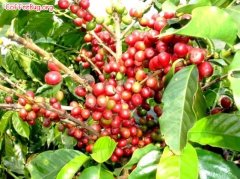
The basic knowledge of coffee beans The three original species of coffee
Coffee belongs to the evergreen shrubs of the genus Coffee of Rubiaceae, centered in tropical regions, with about 500 genera and 6000 species of Rubiaceae plants distributed here. Coffee has long been thought to have certain medicinal effects, such as invigorating stomach, refreshing mind, stopping bleeding, dissipating heat, strengthening body, etc. More famous Rubiaceae plants and gardenia, its fruit has long been dried as medicine

Chain coffee brand Hangzhou accelerates expansion of COSTA, Starbucks new store unveils
The coffee shop will be as busy as my grandmother's house, and it will take an hour to eat hot food. Such a scene appeared in a newly opened coffee shop in Queen's Park, Wulin Road, where the owner played waffles and was very popular with diners. Recently, Hangzhou is not the only new coffee shop. Cold smoke, Landmari, Xiao living room, tea honey and Ruijing are all literary and artistic flavors.
Fine Coffee Science explains in detail the three native species of coffee
Coffee, we generally refer to the finished product: the coffee we drink, also refers to coffee beans. Coffee belongs to the evergreen shrub of the genus Coffee of Rubiaceae. Coffee has some medicinal effects, such as waking up the brain, strengthening the stomach, stopping bleeding, dissipating heat, strengthening the body, etc., hee hee, if anyone is blinded by love, have a cup of coffee to wake up! There are about 40 species of coffee plants, but they can produce commercially valuable
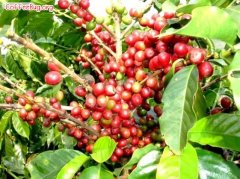
The basics of coffee beans the three native species of coffee
Coffee belongs to the evergreen shrub of the genus Rubiaceae, which is centered in the tropics. There are about 6000 species of Rubiaceae belonging to 500 genera. Coffee has always been thought to have certain effects, such as strengthening the stomach, waking up the brain, stopping bleeding, dissipating heat, strengthening the body, and so on. The more famous Rubiaceae plant is Gardenia jasminoides, whose fruit was dried and used as medicinal material a long time ago. The three native species of coffee

Refill = renew your life? Coffee drinkers reduce the death rate by 12%!
In a study of more than 180000 subjects, researchers at the University of Southern California found that people who regularly drank regular or non-caffeinated coffee were healthier, for example, lived longer and were less likely to develop many cancers and chronic diseases. Now, here we are.

Introduction to the characteristics of high-quality coffee beans with smooth texture in Bolivian coffee producing areas
The legal capital, the seat of the Supreme Court, with a population of 284000, 2790 meters above sea level. Founded in 1538, the city was formerly known as Chuquisaka. The city witnessed the first uprising in South America against Spanish rule in 1809. Bolivia declared its independence here in 1825 and became the capital in 1826. In 1839, it was renamed Sucre to commemorate the second president of Bolivia, General Antonio Jos é Sucre.

The basic knowledge of Coffee beans Coffee beans are the three native species of coffee
Coffee belongs to the evergreen shrub of the genus Rubiaceae, which is centered in the tropics. There are about 6000 species of Rubiaceae belonging to 500 genera. Coffee has always been thought to have certain effects, such as strengthening the stomach, waking up the brain, stopping bleeding, dissipating heat, strengthening the body, and so on. The more famous Rubiaceae plant is Gardenia jasminoides, whose fruit was dried and used as medicinal material a long time ago. The three native species of coffee

How many coffee producing countries are there in the world?
1. Arabica species (scientific name Coffea arabica) Arabica species is native to Ethiopia's Abyssinian plateau (now Ethiopia plateau), early mainly as a medicinal food (Islamic lovers used as a healing medicine or to wake up), 13th century developed the habit of baking and drinking, 16th century introduced to Europe via Arabia
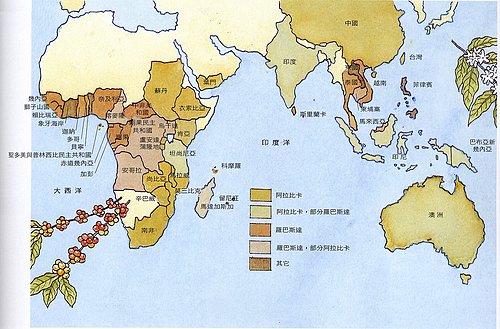
The basic knowledge of Coffee beans the three native species of coffee Robsta species Arabica species Libby
Basic knowledge of coffee beans (1) Coffee belongs to the evergreen shrub of the genus Rubiaceae, which is centered in the tropics. There are about 6000 species of Rubiaceae belonging to 500 genera. Coffee has always been thought to have certain effects, such as strengthening the stomach, waking up the brain, stopping bleeding, dissipating heat, strengthening the body, and so on. The more famous Rubiaceae plant is Gardenia jasminoides, whose fruit was dried and used as medicine a long time ago.

Low yield coffee cultivation conditions Cultivation process and method Introduction
West Africa is the origin of Liberian coffee. It has strong adaptability to various environments such as high temperature or low temperature, humidity or dryness. It is not resistant to leaf rust and its flavor is worse than Arabica. Therefore, it is only traded domestically in some West African countries (Libya, Cote d'Ivoire, etc.) or planted for research. Coffee circulating in the world market

Great taste Tanzanian coffee flavor Taste Manor Features Kilimanjaro Coffee
Tanzania is rich in mineral resources. As of 2014, the main proven minerals include gold, diamond, iron, nickel, phosphate, coal and various gemstones, ranking fifth in Africa in total. Tanzania's natural gas reserves are also very large. According to Tanzania's official data, Tanzania has proven natural gas reserves of 44 trillion cubic feet, and the total reserves are expected to be at least

Burundian boutique coffee Heart of Africa Burundian Heart of Africa Coffee introduction
Professional Coffee knowledge Exchange more information about coffee beans Please note the coffee workshop (Wechat account cafe_style) Front Street-Burundi Heart of Africa Burundi, the heart of Africa. According to the statistics of the World Bank in 2011, there are about 600000-800000 families living on coffee in Burundi, and coffee is the core of Burundi. Burundi is a

Slippery taste of Bolivian coffee manor features boutique coffee beans
The legal capital, the seat of the Supreme Court, with a population of 284000, 2790 meters above sea level. Founded in 1538, the city was formerly known as Chuquisaka. The city witnessed the first uprising in South America against Spanish rule in 1809. Bolivia declared its independence here in 1825 and became the capital in 1826. In 1839, it was renamed Sucre to commemorate the second president of Bolivia, General Antonio Jos é Sucre.

Introduction of high-quality coffee with rich and unique aroma in Bolivian coffee manor
In 1932, the Chaco War broke out between Bolivia and Paraguay for oil resources in the North Chaco region. Bolivia was defeated and lost a large area of territory. The people's armed uprising broke out in April 1952, and Paisdensolo, leader of the nationalist revolutionary movement, became president. Since then, there have been frequent military coups and long-term political instability. Modern assets with South American characteristics were restored in October 1983

Full-bodied sweet Bolivian coffee flavor Taste Manor Features
In 1863, a rich deposit of saltpeter was discovered in Atacama province on the Pacific coast. In 1879 Chile sent troops to occupy Kuangqu, Bolivia and Peru united, and Chile fought the Pacific War. Bolivia lost its defeat in 1883, ceded the Pacific coast rich in saltpeter to Chile in 1904, and Bolivia lost its only coastal province, including the important port of Antofagasta, from

Fragrant and mild taste of Salvadoran Himalayan coffee taste manor cultural tradition Jane
El Salvador Carnival is an important festival in Brazil, which is famous for its large-scale street parades and authentic music and dance. During the carnival, it is full of music and dance, which is the most true embodiment of Brazilian tradition and carnival spirit. El Salvador coffee is a specialty of Central America, where coffee is light, fragrant, pure and slightly sour. With the Guatemala Horse

What happens if you drink too much coffee? what is caffeine? the negative effects of coffee addiction on the body
Caffeine addiction is the excessive and harmful use of caffeine over a period of time, which has a negative impact on people's health, social interaction, life or other aspects. What is caffeine and caffeine addiction caffeine is the most widely used drug in the world. Coffee and soda are the main sources of caffeine in the United States, while African and Asian countries tend to drink soda

Introduction to the characteristics of Tanzania Fine Coffee Bean Flavor Manor with excellent Taste
Tanzania is rich in mineral resources. By 2014, the major minerals identified include gold, diamond, iron, nickel, phosphate, coal and various gemstones, ranking fifth in Africa in total. Tanzania also has huge natural gas reserves. According to official data released by Tanzania, Tanzania has proven natural gas reserves of 44 trillion cubic feet, and the total reserves are expected to be at least